How to Start a Christian Audio Drama Podcast in 2026
Now Streaming
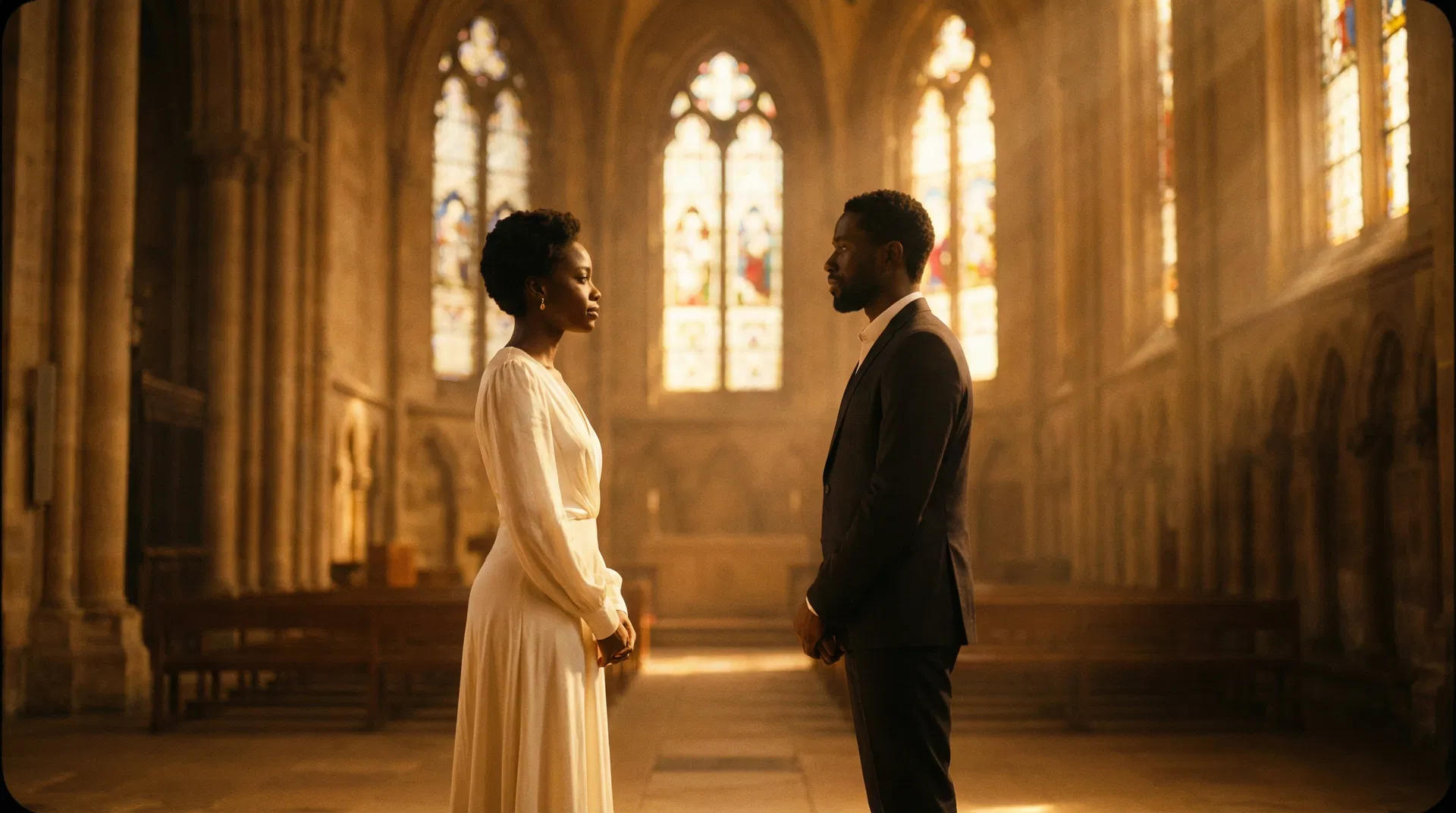
Betrayed at the Altar, Saved by Grace
The complete step-by-step guide for faith-filled creators ready to produce binge-worthy audio stories — from script to sound design to distribution.
There has never been a better time to be a Christian audio drama creator. In 2026, the tools that once required a full production studio — professional-grade voice synthesis, cinematic sound design, multi-track editing, and global distribution — are now available to any believer with a laptop, a story, and a calling. Platforms like Believers Box are proving that faith-filled audio drama is not a niche curiosity; it is a growing movement. And the Kingdom needs more storytellers willing to pick up the microphone.
If God has placed a story on your heart — a drama about redemption, a romance that honors Him, a suspense series that points people back to the Word — this guide is for you. Here is exactly how to start a Christian audio drama podcast in 2026, from the first spark of an idea to your first published episode.
Step 1: Clarify Your Vision and Calling
Before you touch a single piece of equipment, you need to answer one foundational question: What story is God asking you to tell?
Christian audio drama is not simply a podcast with a Bible verse at the end. The best faith-based audio dramas are built around a redemptive arc — a story where characters are broken, tested, and ultimately transformed by the grace of God. Think about the themes that move you most: a woman who discovers her husband's secret and has to choose between revenge and forgiveness; a pastor's daughter who falls for the wrong man and finds her way back to purpose; a CEO whose empire crumbles and who rebuilds it on a foundation of faith.
Ask yourself these questions before you begin:
- Who is my audience? (Women navigating marriage? Young believers in the workplace? Believers in the diaspora?)
- What is the central spiritual tension in my story?
- What do I want listeners to feel, believe, or do differently after hearing each episode?
- Is this a limited series (one season, 10–12 episodes) or an ongoing serial?
Clarity at this stage will shape every decision you make downstream, from casting to cover art to the platforms you choose for distribution.
Step 2: Write a Script Built for Audio
Audio drama is a distinct art form. Unlike a novel, every scene must be communicated entirely through sound — dialogue, narration, ambient noise, and music. There are no visual cues, no facial expressions, no set design. Your script is your entire world.
The Essentials of Audio Drama Scripting
A well-written audio drama script includes the following elements:
| Element | Purpose | |---|---| | Narration / Voice-over | Establishes setting, time, and internal character emotion | | Dialogue | Drives the plot and reveals character — keep it sharp and purposeful | | Sound cues | Indicate location changes, physical action, and atmosphere (e.g., [SFX: church bells, door creaks open]) | | Music cues | Set emotional tone — use sparingly and intentionally | | Cliffhanger endings | Every episode should end with an unresolved tension that compels the listener to play the next one immediately |
For a 10–15 minute episode, aim for approximately 1,500 to 2,000 words of script. Keep sentences short and conversational — dialogue that reads beautifully on a page often sounds unnatural when spoken aloud. Read every line out loud as you write it.
Recommended format: Use Final Draft, Celtx (free), or even a simple Google Doc with clear speaker labels and stage directions in brackets.
Step 3: Build Your Recording Setup
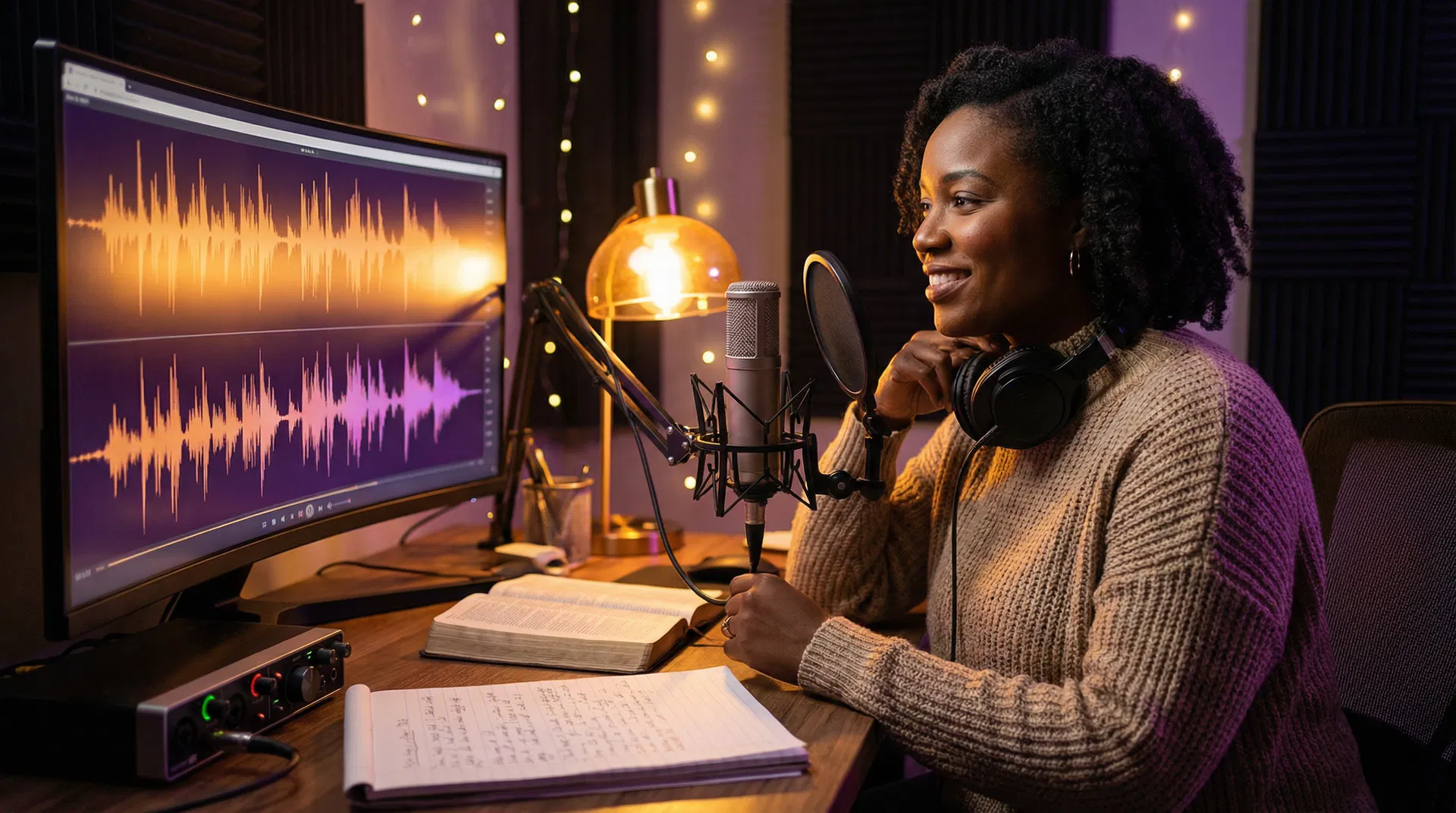
The good news: you do not need a professional recording studio to produce a high-quality Christian audio drama in 2026. Many of the most beloved faith-based audio dramas are recorded in home studios built for under $300.
Budget Starter Kit (Under $300)
| Item | Recommended Option | Approximate Cost | |---|---|---| | USB Microphone | Audio-Technica ATR2100x-USB | $79 | | Headphones | Sony MDR-7506 | $99 | | Pop Filter | Any standard pop shield | $10–15 | | Acoustic Treatment | Moving blankets or foam panels | $30–50 | | Recording Software (DAW) | Audacity (free) or GarageBand (Mac, free) | $0 |
Mid-Range Setup (Under $800)
For creators who want a noticeable step up in audio quality:
| Item | Recommended Option | Approximate Cost | |---|---|---| | XLR Microphone | Shure SM7B or Rode NT1 | $200–$400 | | Audio Interface | Focusrite Scarlett Solo (4th Gen) | $120 | | DAW | Reaper (perpetual license) | $60 | | Acoustic panels | Dedicated foam tiles | $50–$100 |
Pro tip: The single most impactful upgrade you can make is not your microphone — it is your room acoustics. Recording inside a closet full of clothes, or under a thick duvet, will dramatically reduce room echo and produce cleaner audio than an expensive mic in a bare-walled room.
Step 4: Cast Your Voice Actors (or Use AI Voices)
One of the most exciting developments for independent Christian audio drama creators in 2026 is the maturation of AI voice synthesis. Tools like ElevenLabs now produce voices that are remarkably human — capable of conveying emotion, urgency, and tenderness in ways that were impossible just two years ago.
Option A: Real Voice Actors
Casting real voice actors gives your drama an irreplaceable human quality. You can find Christian voice actors through:
- Voices.com and Voice123 (professional marketplaces)
- Your local church or theatre ministry (many gifted voices are sitting in the pews)
- Christian creative Facebook groups and communities like ChristianWriters.com
- Fiverr (affordable for indie productions; always request a sample first)
Budget approximately $50–$200 per episode for a small cast of 3–5 voices, depending on episode length and actor experience.
Option B: AI Voice Synthesis
For solo creators or those on a tight budget, AI voice tools have become a legitimate production option:
- ElevenLabs — Industry-leading voice quality; offers multilingual voices and emotional range. Ideal for narration and supporting characters. Plans start at $5/month.
- Murf AI — Clean, professional voices well-suited for narration-heavy dramas.
- Play.ht — Strong for multi-character productions with a large voice library.
Many creators use a hybrid approach: a real human voice for the lead character (the one listeners bond with most deeply) and AI voices for secondary characters and narration. This keeps costs low while preserving emotional authenticity at the center of the story.
Step 5: Add Sound Design and Music
Sound design is what transforms a recorded script into a world. The difference between a flat audio recording and an immersive drama is almost entirely in the sound design layer.
Where to Find Royalty-Free Sound Effects
- Freesound.org — Massive community library; free with attribution
- Zapsplat.com — High-quality effects library; free and premium tiers
- Soundsnap.com — Professional-grade effects used in film and TV
- Adobe Audition's built-in library — Excellent for subscribers
Where to Find Royalty-Free Music
- Epidemic Sound — $15/month; exceptional quality for drama and suspense
- Artlist.io — $16.60/month; cinematic and emotional tracks
- Free Music Archive — Free; quality varies but gems exist
- YouTube Audio Library — Free; good for ambient and instrumental tracks
A word on music and faith: Choose music that serves the story, not music that announces its Christianity. A tender piano melody during a reconciliation scene carries more spiritual weight than an overtly religious track that pulls listeners out of the narrative. Let the story preach; let the music feel.
Step 6: Edit and Master Your Audio
Editing is where your drama comes to life. The goal is a final mix that sounds seamless — where the listener forgets they are hearing separate recorded elements and simply experiences the story.
Basic Editing Workflow
- Clean the dialogue tracks — Remove background noise, mouth clicks, and long pauses using noise reduction tools in Audacity, Reaper, or Adobe Audition.
- Layer in sound effects — Place ambient sounds (room tone, outdoor environments) beneath the dialogue, and punctuate scenes with specific sound cues.
- Add music — Bring music in and out gradually (fade in / fade out) to avoid jarring transitions. Music should sit beneath dialogue, not compete with it.
- Master the final mix — Aim for a final loudness of approximately -16 LUFS for podcast distribution (this is the standard for Spotify and Apple Podcasts). Use a free tool like Auphonic for automated mastering.
Episode length sweet spot: For binge-worthy Christian audio drama, aim for 10–18 minutes per episode. Short enough to listen to during a commute; long enough to develop real emotional tension.
Step 7: Choose Your Hosting and Distribution Platform
Once your episode is edited and mastered, you need a podcast hosting platform to distribute it to Apple Podcasts, Spotify, Amazon Music, and beyond.
Recommended Hosting Platforms for 2026
| Platform | Best For | Starting Price | |---|---|---| | Buzzsprout | Beginners; clean analytics; easy setup | Free (limited) / $12/month | | RSS.com | Unlimited storage; growing creator community | $8.25/month | | Anchor by Spotify | Free unlimited hosting; direct Spotify integration | Free | | Captivate.fm | Growth-focused creators; strong analytics | $17/month | | Podbean | Monetization features built-in | Free / $9/month |
For a premium, subscription-based Christian audio drama platform — where your most devoted listeners pay for access to your full library — consider building your own branded platform (like Believers Box) in addition to free podcast distribution. This gives you direct ownership of your audience and your revenue.
Step 8: Launch with a Strategy, Not Just an Episode
The most common mistake new audio drama creators make is launching with a single episode and hoping the algorithm does the rest. In 2026, a strong launch requires intentional community building before the first episode drops.
Your Pre-Launch Checklist
- Build an email list — Start collecting emails from interested listeners 4–6 weeks before launch. Offer a free bonus (a behind-the-scenes look at your story, a character profile, a Scripture reading) in exchange for the signup.
- Create a trailer episode — A 3–5 minute trailer that introduces your world, your characters, and the central conflict is essential. Drop it 2–3 weeks before your full launch.
- Launch with 3 episodes minimum — Give new listeners enough to binge immediately. A single episode is not enough to build the habit.
- Announce on social media with intention — Short audiograms (a 60-second audio clip with a waveform animation) perform exceptionally well on Instagram Reels and TikTok. Tools like Headliner.app make these easy to create.
- Submit to Christian podcast directories — List your show on directories like ChristianPodcaster.org and submit to curated lists of faith-based audio content.
Step 9: Grow Your Audience Through Community
Christian audio drama thrives on word of mouth within the Body of Christ. Your most powerful marketing channel is not an ad — it is a listener who tells her sister, her small group, or her church community about a story that moved her.
Strategies that work for faith-based audio drama creators in 2026:
- Partner with Christian bloggers and influencers who already serve your target audience. Offer them early access to your series in exchange for an honest review.
- Engage in Facebook groups for Christian women, Christian romance readers, and faith-based entertainment communities.
- Create a listener community — a private Facebook group or Discord server where fans can discuss episodes, share reactions, and feel connected to the story and each other.
- Collaborate with other Christian creators — cross-promotions with complementary podcasts (devotionals, Christian romance book clubs, women's ministry shows) can rapidly expand your reach.
A Final Word: Your Story Is a Ministry
Starting a Christian audio drama podcast is not simply a creative project. It is an act of obedience. Every story you tell has the potential to reach a woman who is sitting in her car in a parking lot, crying and wondering if God still sees her — and your drama, with its redemptive arc and its whisper of grace, might be the thing that reminds her He does.
The technology is ready. The audience is hungry. The Kingdom needs storytellers who are not afraid to go deep, go dramatic, and go faithful.
Your story matters. Start recording.
Ready to share your audio drama with the world? Believers Box is a premium platform built for exactly this kind of faith-filled storytelling. Listen to our featured series and see what is possible when faith meets great audio drama.